Sharp Example: applicationemail.com
Here’s a sharp pitch page worth studying: applicationemail.com, a site by Garrett Dimon.
Edit: The site shown here is no longer live but the example is still solid.
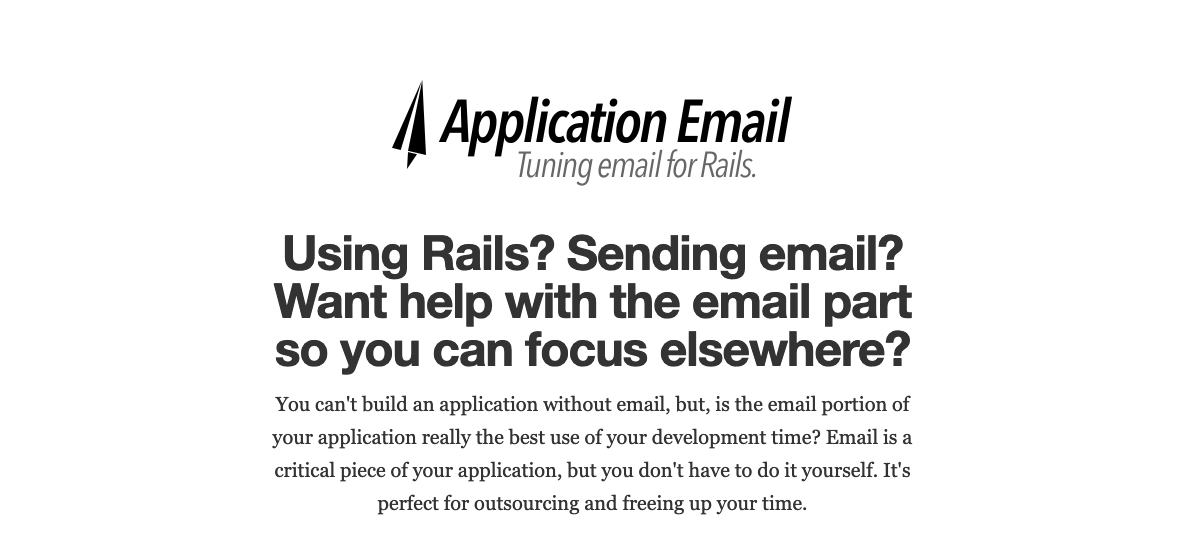
Garrett Dimon used to run this consultancy. He helped people stuck on the specific difficulties developers run into with handling email.
What We’re Looking For In a Sharp Page
Before we take it apart and show why it was a great example, a reminder of what we’re looking for in a sharp page:
- Evidence that the author understands the hard struggle the service or product is there to solve;
- In other words, that the author understands the job-to-be-done of the visitor;
- More specifically, that the author understands the situations that cause someone to seek help, to moving away from the current “good enough” mish-mash of practices that the service is competing with;
- Also, that the author addresses the Forces of Progress, the back-and-forth the visitor will likely go through when considering going forward;
- Lastly, that the page is clearly there to help visitors make progress, and not interested in merely capturing sales with slimy tactics.
So let’s pick apart the page.
The Struggle And The Job
At the top (see image above), we get a clear pitch. Garrett helped you fix problems with the email of your application.
For the struggle, there was this line:
Is the email portion of your application really the best use of your development time?
And the job-to-be-done of the service? It was right in the title:
So you can focus elsewhere
The visitor came to the site, and what they were promised: focus on your job, and I’ll focus on this one thing that I know very well, so you won’t have to focus on it.
Situations When…
Garrett then listed these situations that visitors might find themselves in…
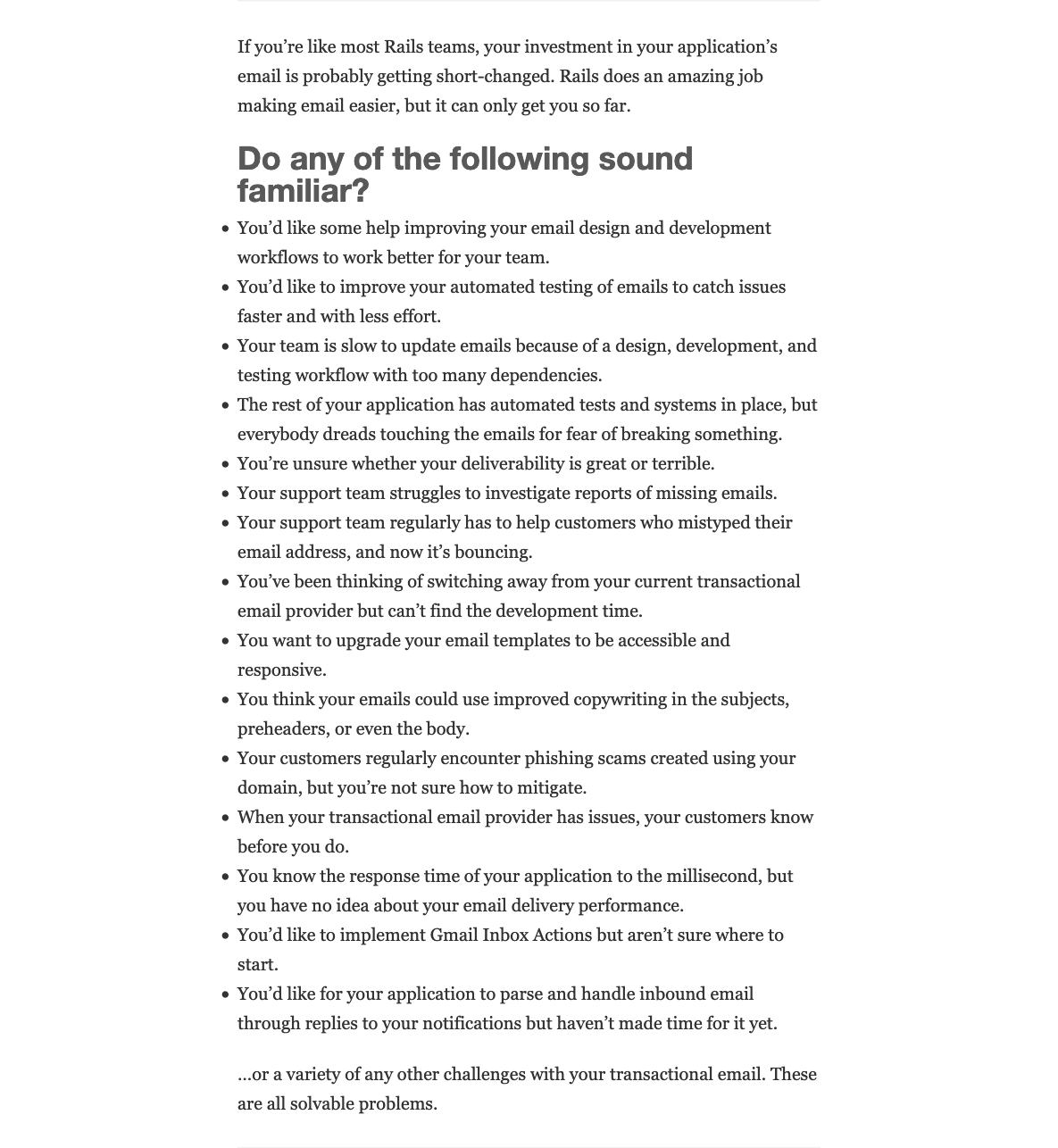
There were some really juicy situations listed here:
The rest of your application has automated tests and systems in place, but everybody dreads touching the emails for fear of breaking something.
Your support team struggles to investigate reports of missing emails.
Your customers regularly encounter phishing scams created using your domain, but you’re not sure how to mitigate.
That had the effect of not only connecting with the current problem, but hinting at many other problems to come, that Garrett could help avoid.
So here, the job changed a little bit, away from “Garrett can help me focus on my actual strengths in my job” to “Garrett can help us avoid future headaches.”
If you, as a visitor, scrolled all the way down here and you were still reading, surely Garrett had your attention.
So how could Garrett help you trust him even more?
Describing What Progress Looks Like
Scrolling down a bit more, we see Garrett describing what the future might look like. A different future, where the problem no longer exists…
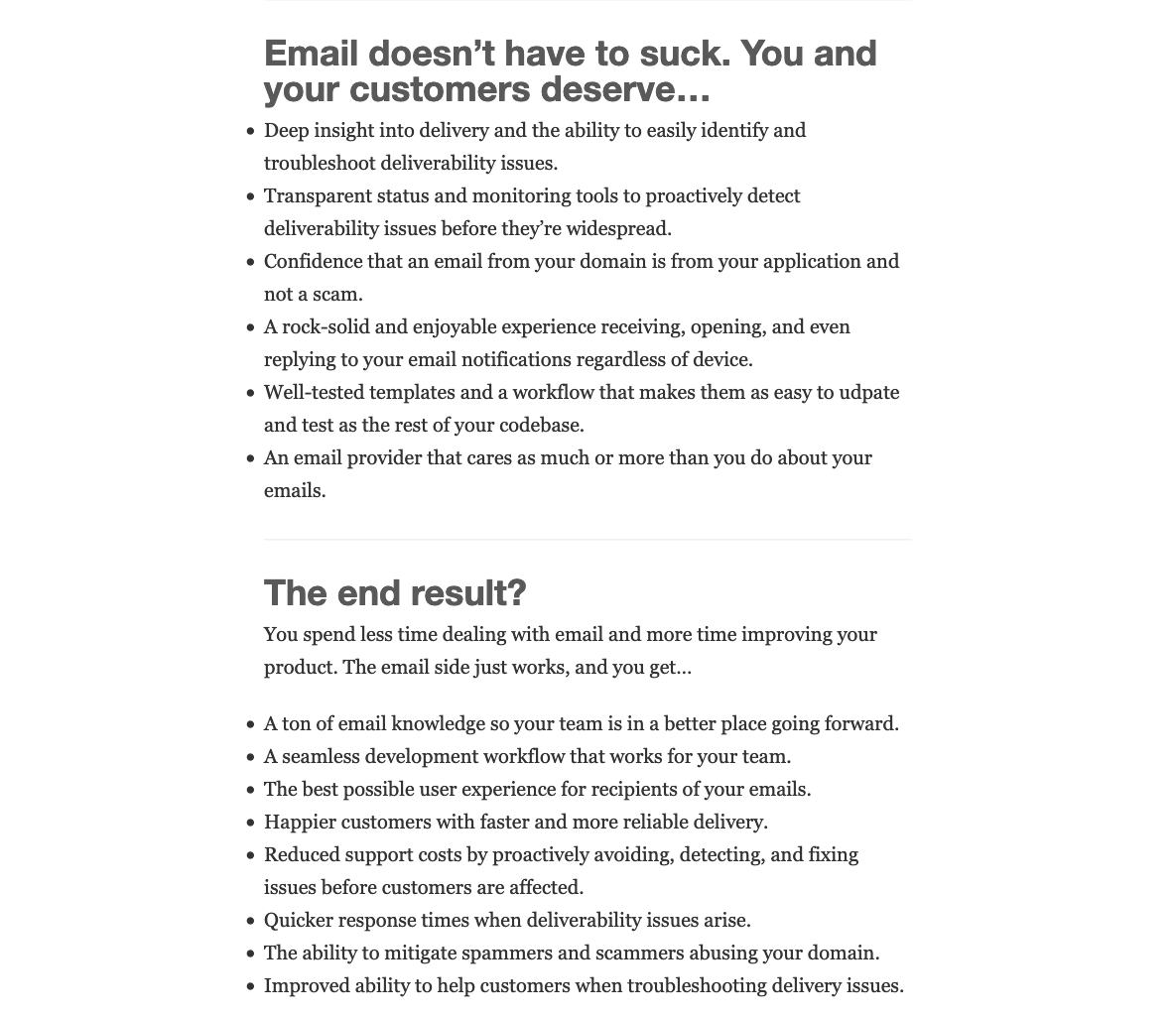
Garrett here operated on the Attraction to the Solution force, pulling the visitor toward going forward with his services.
By now, you as the visitor were thinking:
- →⚬ I’ll be able to get moving with my problem;
- →⚬ Garrett seems to have the required expertise and knowledge;
- →⚬ There’s proof that he’s done good work in the past for the kinds of problems I’m experiencing.
- →⚬ We’ll be able to protect our application against future problems
- →⚬ We’ll be able to get new knowledge
- →⚬ We’ll finally be able to get confidence regarding our email
The Pitch
Only after having built all of this interest and trust did Garrett present himself:
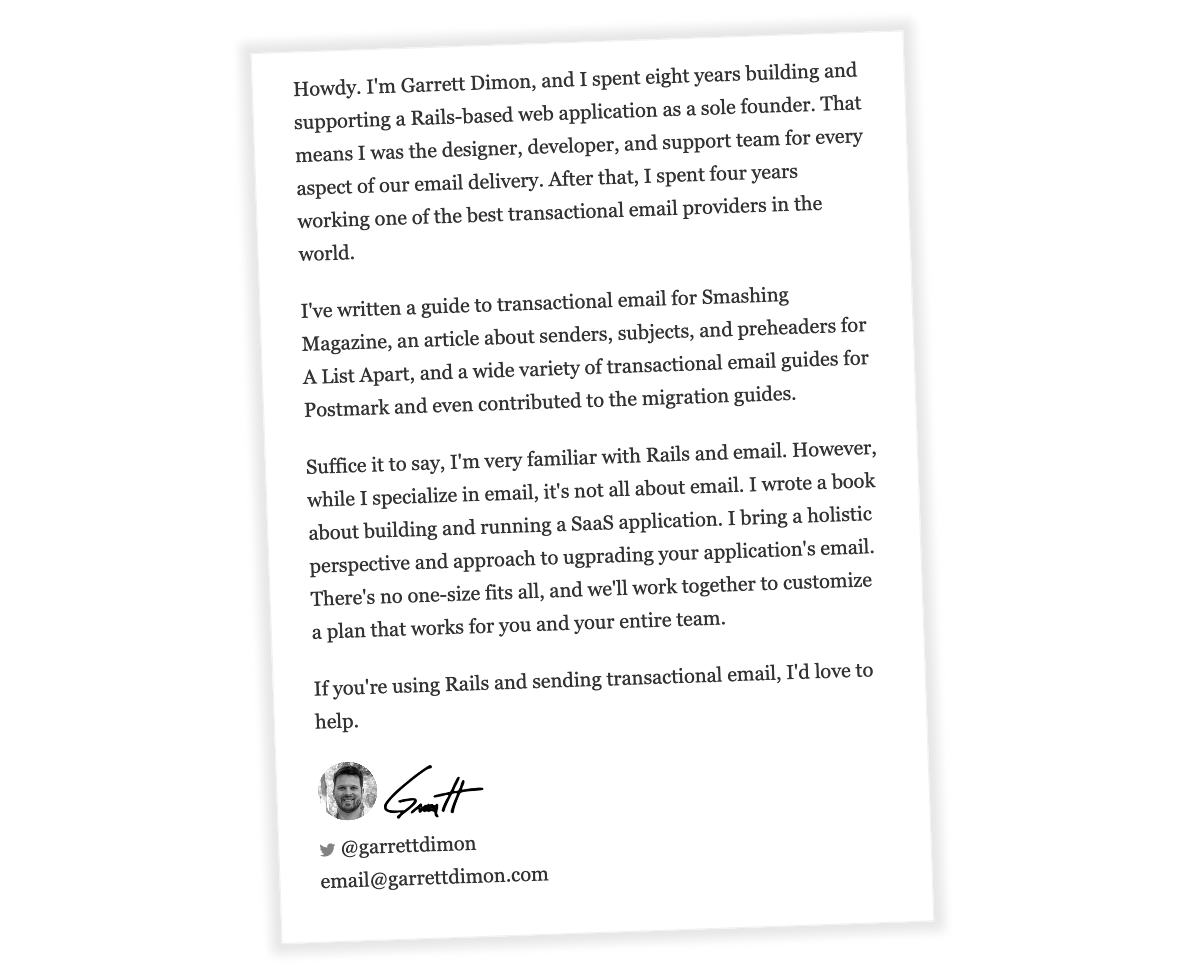
And then, the pitch:
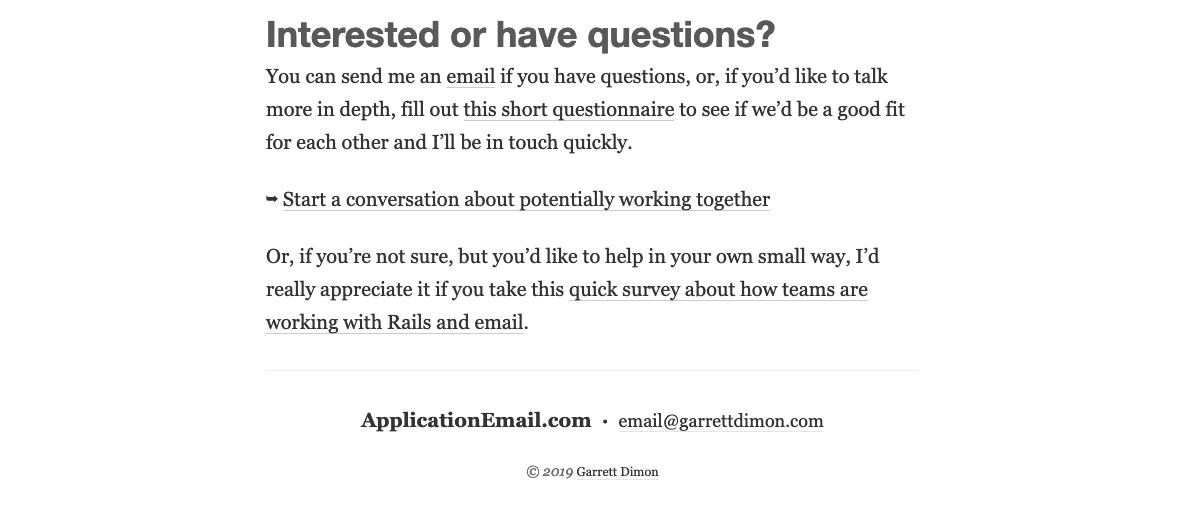
For those who had scrolled all the way down (which was also a super quick part of the page to get to), Garrett presented a way forward: email or fill this questionnaire. Boom.
And if you were hesitating (which most visitors probably would be), how about helping out by filling a survey? Brilliant little move to catch non-consumption.
It was a really great page. Without fluff, confidently in a long format, and it showed he understood the struggle really well.
Well done, Garrett.
Stay Sharp!
—